Since the mid-1980s, we have been on a journey that reflects the changing face of the workplace. From the early days of space-hungry corner desks and bulky technology to today’s ergonomic sit-stand trading desks, the evolution we’ve seen and proudly been a part of has been remarkable. At DAS, we have grown alongside these shifts. Our role has always been to listen, to adapt, and to create solutions that fit not just the equipment of the moment, but the people and organisations using them. Over more than three decades, that approach has shaped how we design, how we collaborate, and how we deliver.
Beginnings in the 1980s
The mid-1980s brought sweeping change to finance. The deregulation of the UK Stock Market in and "big bang" in 1986 unlocked new trading opportunities and with them, a change in the workplace.
Standard office furniture was no longer enough, traders needed specialist desks capable of handling multiple phones, dealer boards, and complex technology. Our response was the Linear Trading Desk: a wood-based, practical work station, tailored to the demands of the time. By embedding functionality directly into the work surface, it helped traders work more efficiently in high-pressure environments.
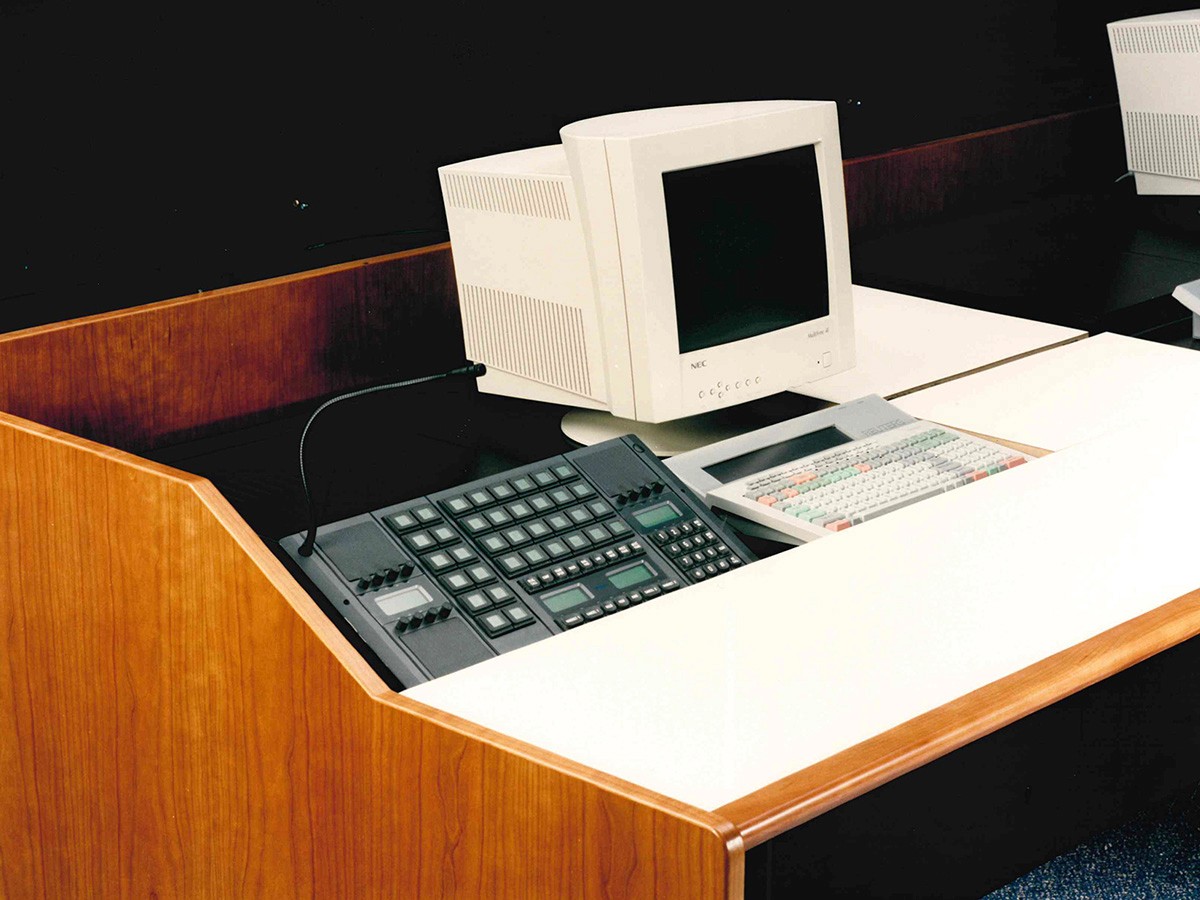
Our early partnerships with institutions such as Cantor Fitzgerald, Midland Bank, and the European Bank for Reconstruction and Development set the tone for what followed. These projects weren’t about simply supplying furniture, they were about listening to unique requirements, designing accordingly, and ensuring delivery at scale. It was collaboration in action, something that has defined our work ever since.
The 1990s: Adapting to Flat-Screen Technology
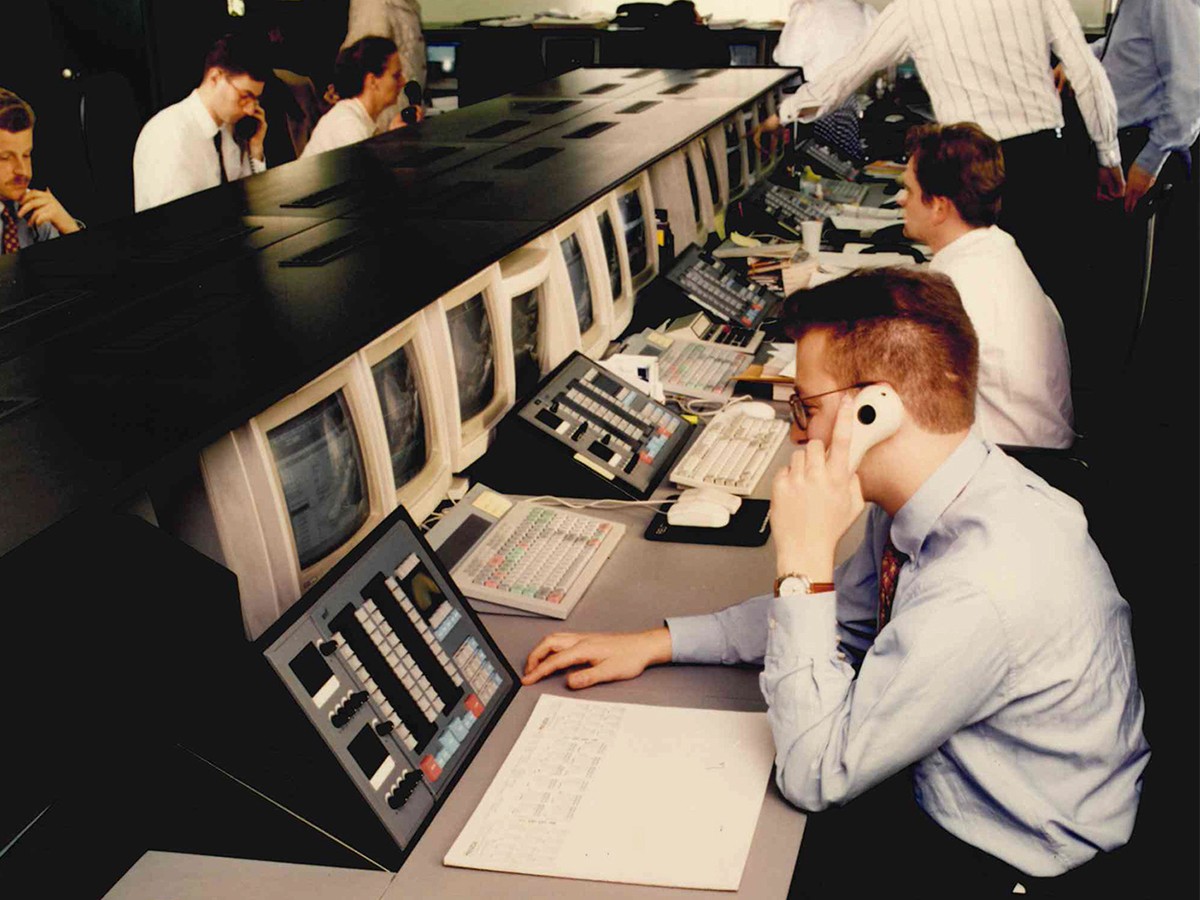
The 1990s introduced flat-screen monitors, a development that may seem minor today but at the time changed everything. Desks no longer needed the same depth allowing trading floors to reclaim valuable space and more desks to the trading floor.
We responded with Multi-task: a modular desk system built around a steel chassis with sliding quick-release work surfaces and management rails. It was flexible, easy to adapt, and designed with future change in mind.
This adaptability reflected more than just good engineering. It came from conversations with clients. Understanding their frustrations with static, bulky setups, and designing something that could move with them. Banks such as Commerz and Kleinwort Benson adopted Multi-task, recognising not just the practicality of the product but the responsiveness behind it.
Broadening Horizons
As the decade progressed, it became clear that trading desks could not be considered in isolation. Trading environments were part of a greater framework, workplaces where flow, integration, and cohesion mattered just as much as the desks themselves.
We began offering complete workplace solutions, guiding clients from consultation and design through to installation and long-term support. This holistic service allowed us to create environments that were not only technically sound but also supportive, comfortable, and ready for change.
It was during this period that we began developing what would become our flagship family of products: OPTIMA.
The Arrival of OPTIMA: 2000
The launch of OPTIMA in 2000 marked a turning point. The first system was fixed height, but it laid the foundation for a product family that could adapt and evolve over decades.
Two years later, OPTIMA o2 arrived, the world’s first gas-lift height-adjustable modular trading desk. For the first time, traders could choose between sitting and standing, a small but significant step towards healthier, more dynamic workplaces.
That same period saw us collaborate with Colebrook Bosson Saunders on Wishbone; the first monitor arm designed for flat screens. First introduced at Citibank in London, it went on to become a design classic. Both OPTIMA o2 and Wishbone highlighted how we worked: by anticipating needs, collaborating with partners, and producing solutions that genuinely made a difference.
Refinement and Electrification
By the mid-2000s, trading floors were becoming more complex, and desks had to support greater volumes of technology. OPTIMA o5 introduced a twin-beam management rail to meet this challenge, while retaining the flexibility and adaptability our clients valued.
In 2008, we launched OPTIMA o8, our first electrically height-adjustable sit-stand desk. The ability to move between sitting and standing at the touch of a button reflected a growing awareness of workplace well-being. Institutions such as Citigroup, Nomura, and the Royal Bank of Canada were among the first to embrace this new approach.
Behind every advancement lay the same idea, collaboration. By working with our clients, listening to ideas, requests, and complaints we understood their requirements and engineered solutions that worked.
Meeting New Standards: OPTIMA o12
By 2012, ergonomic standards had advanced, and trading floors needed to keep pace, we introduced OPTIMA o12, a system fully compliant with EN 527-1. It combined technical compliance with practical improvements, including an integrated frame and improved cable management.
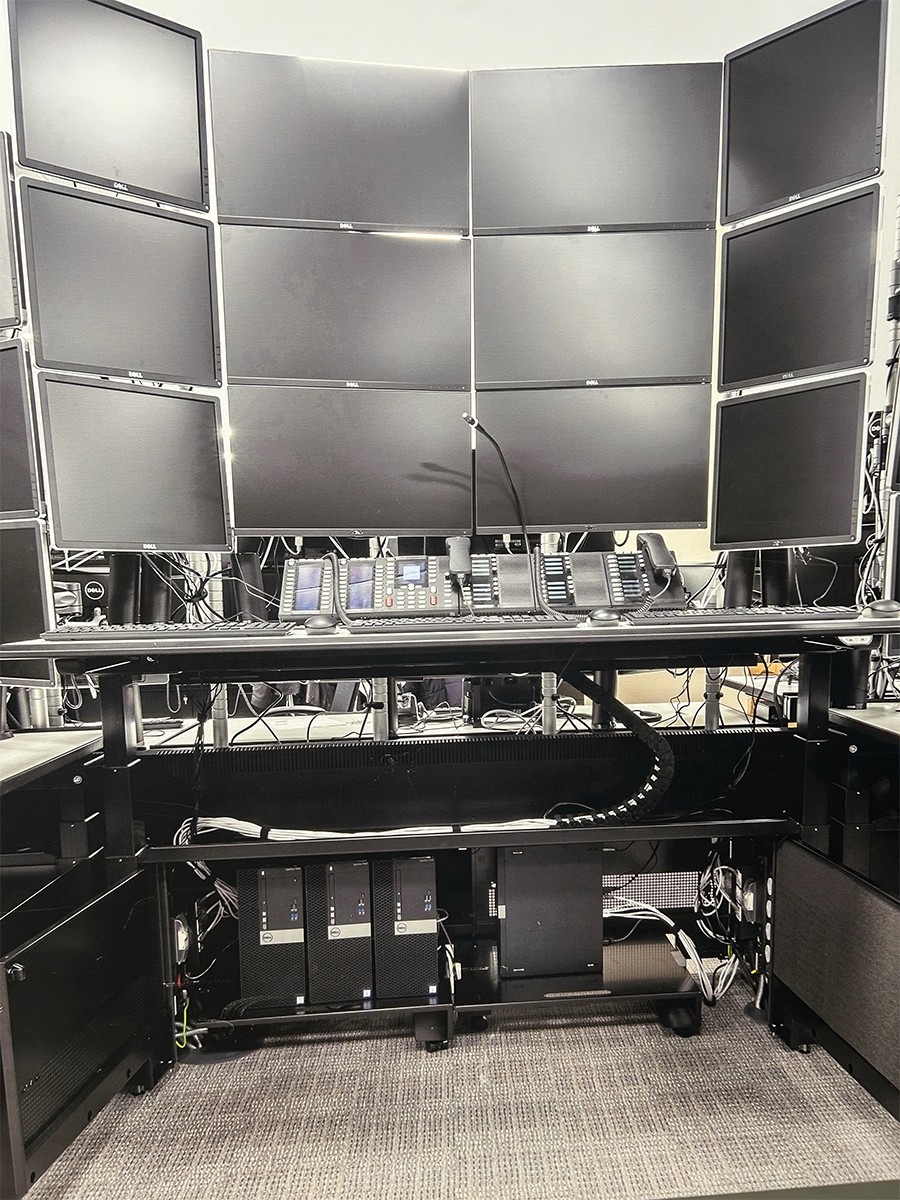
OPTIMA o12 was adopted by global names such as JP Morgan Chase, Bank of America Merrill Lynch, and the Royal Bank of Scotland, but also by organisations outside finance, such as the film production company Double Negative. This versatility demonstrated how adaptable the system, and our approach, had become.
OPTIMA Mk2 and Mk3: Today and Tomorrow
2018 saw the launch of OPTIMA Mk2. It introduced modular technology enclosures, and a focus on interchangeability.
For clients such as the Royal Bank of Canada, OPTIMA Mk2 has become the new benchmark. It is flexible, ergonomic, and robust, embodying everything we have learned about trading furniture over 25 years of continuous refinement.
More than just a product, Mk2 represents the way we work collaborative, adaptable, and design led. It is the culmination of decades of listening, problem-solving, and building alongside our clients.
In 2025, we introduced OPTIMA Mk3, a natural evolution of the system. Building on the strengths of Mk2, it offers refined detailing, improved technology integration, and an even more streamlined appearance. The changes may be subtle, but they reflect years of feedback and collaboration with our clients, resulting in a desk that is cleaner, more adaptable, and easier to work with day to day.
Mk3 is not a departure from what came before, but rather a continuation of our commitment to performance, collaboration, and adaptability. Allowing us to solve any challenge a client may have, providing desking solution for any workplace, from single desks with a single monitor, all the way up to the fast-paced trading floors requiring immense power and technology. Each iteration of OPTIMA has built on the last, and Mk3 represents the most considered version yet, a trading desk that quietly supports the demands of modern environments while staying ready for whatever comes next.
Raceway: Simplifying Power Management
Building on decades of experience in designing functional and adaptable trading desks, DAS introduced the Raceway desk to tackle one of the most persistent challenges in modern trading floors: power management. With its innovative design, the Raceway allows all desks in a workspace to be powered from a single source, eliminating clutter and the hazards of multiple cables running across the floor. Power is routed neatly along the back of each desk, “snaking” around to reach every workstation efficiently and safely. This solution not only streamlines electrical setups but also enhances flexibility, allowing clients to reconfigure their layouts without the complexity of rewiring. The Raceway desk is a prime example of DAS’s commitment to solving practical challenges through thoughtful design, keeping technology seamless and workspaces organized.
Looking Back, Looking Ahead
As we reflect on almost 40 years of DAS and 25 years of OPTIMA, the story is not just about desks. It is about people, partnerships, and progress. Each stage of our history shows how design evolves when it responds to real needs, how collaboration shapes better outcomes, and how adaptability allows us to meet challenges head-on.
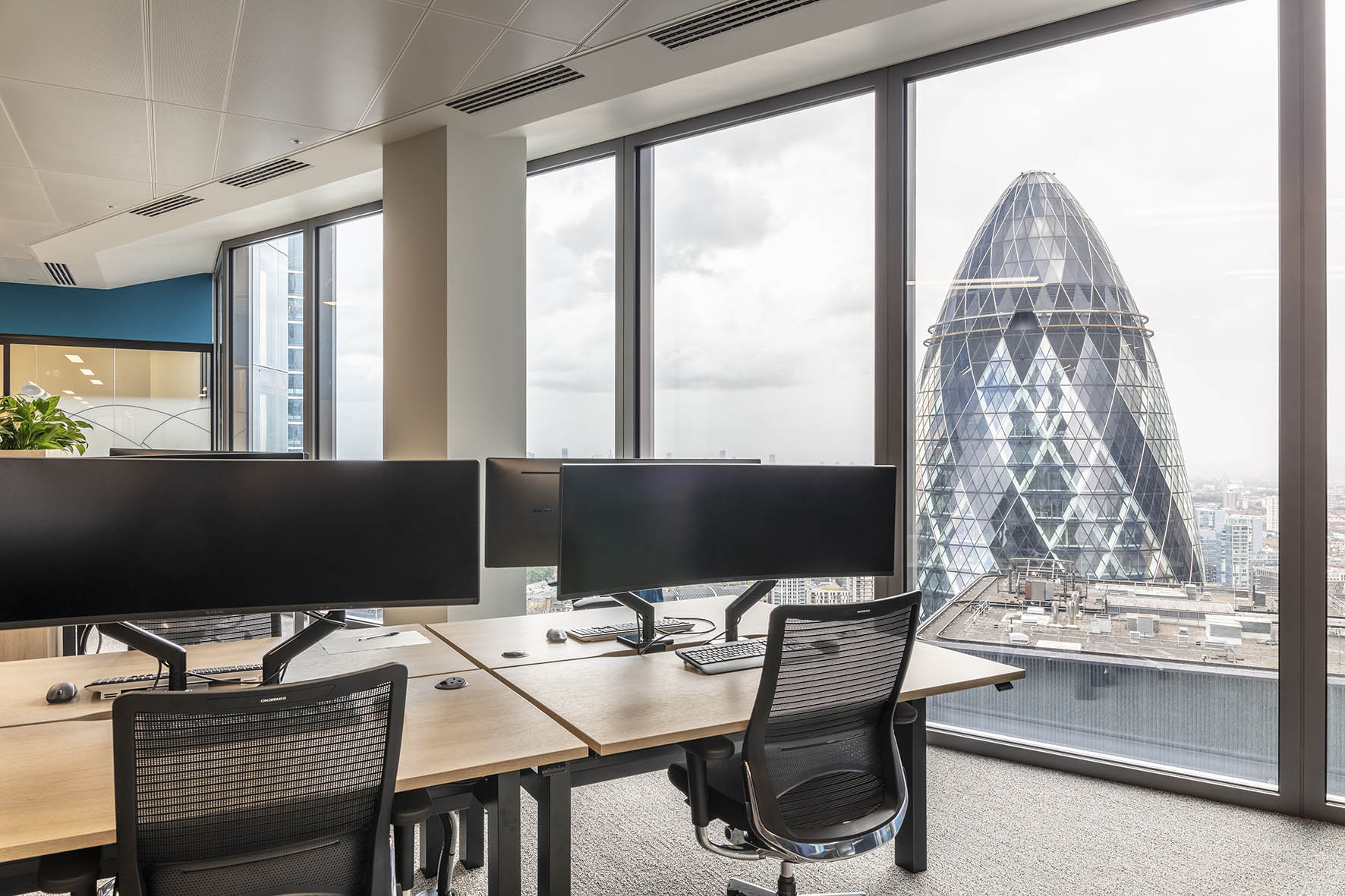
From wood-based desks with built-in handsets to today’s modular sit-stand systems, the changes have been significant. Despite the rapid evolution we’ve been a part of, our core mission remains: a commitment to understanding our clients and creating solutions that help them succeed.
As we look to the future, that commitment continues. The workplace will keep changing, as it always will, and we are ready to evolve with it.
Ready for the Next Chapter?
For nearly four decades, DAS has partnered with organisations to shape workplaces that don’t just adapt to change, they lead through it. From cultural transformation to hybrid work strategy, we bring insight, creativity, and deep experience to every engagement.
We understand that every business is unique, which is why our approach is never one-size-fits-all. Whether you're redesigning your space, rethinking how your teams collaborate, or planning for future growth, our team is here to help you navigate complexity and move forward with confidence.
If you're considering the next stage of your workplace evolution, partner with DAS to design a space, and a strategy, that works smarter, feels better, and performs stronger.
Get in touch today to start a conversation about what’s next.